
We spent 4 nights in San Juan but two of those days we were on an overnight guided tour with Carrascal Viaje & Turismo. This is the start of our journey to Talampaya National Park.

Yeah baby, we were the only Americans on our bus full of Argentinians. We hope to traverse Latin America once my Spanish gets better, my goal is to be able to travel off the beaten path and I’d feel better knowing the language. I really should have tried learning years ago when Vic kept encouraging me. Well, it took me over a decade. Argentine Spanish is very different. They speak fast and their accent is different from what I hear back in NYC, they sound kind of Italian to me. I didn’t notice last time but this time I did since I was trying to see how much I could understand.

We didn’t have much time at La Difunta Correa. It was a 20 minute bathroom break and a quick look see.
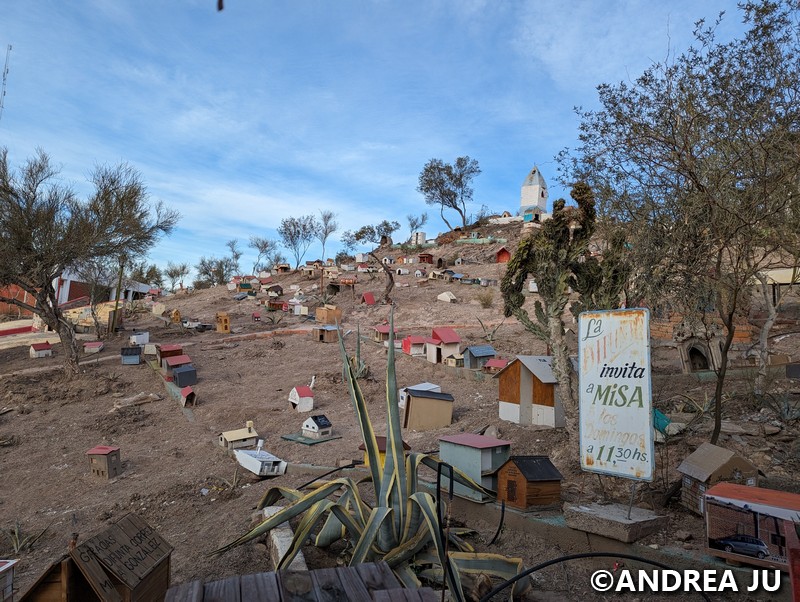
Forgive me if I don’t describe it right, I only got bits on the tour and using wiki. According to wiki its an important folk legend for the region. From our trip, I just know its of importance and people come to pay their respects.

This is a story about Deolinda Correa and how her husband was forced to serve in the military during the Argentine Civil Wars, around 1840. The Montoneras (paramilitary groups who fought for independence in Hispanic America against Spain) abandoned Deolinda’s sick husband. She set out with her baby in the desert of San Juan Province to find him by following the tracks of the Montoneras. She died when her supplies ran out. Gauchos (Argentine cowboys) found her days later while driving cattle through the area. To their surprise, her baby was still alive and feeding from her full breast. They buried her body and took the baby with them.
This shrine is located in Vallecito, Argentina where it is said the men buried her.

The tale grew in popularity and Deolinda became an unofficial saint, not recognized by the Catholic Church. Her followers believe she performs miracles for the living since the survival of her baby was a miracle. There are shrines all over the country. Bottles of water are left “to calm her eternal thirst”.

Each chapel has a different theme but I’m not sure if our pics captured all of it. You can see car registrations and model houses on the hill to the main sanctuary. Wedding dresses are left by women whose prayers for marriage have been fulfilled.

You can visit the shrine all year long. Easter, All Saints Day (November 2nd) and dates pertaining to guachos and truckers tend to be the busiest. She is a patron of gauchos, truckers, ranchers, and cattle herders. They say crowds of up to 200,000 visit during busy times.

 Jebus Mews & Andrea